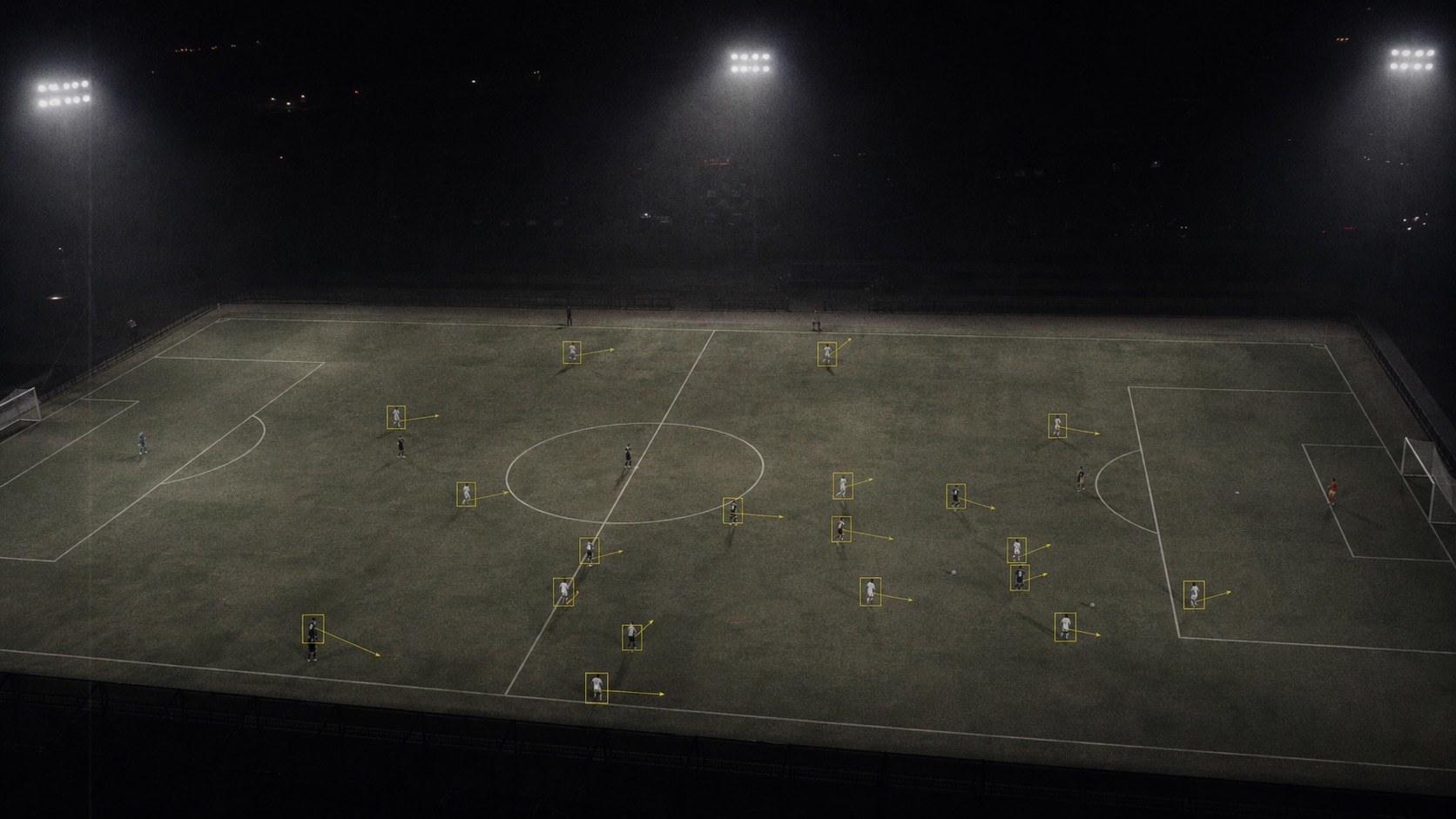
Computervisionforsports—TürkiyeMinistryofSport
Video and stats are annotated by hand — one match takes hours to break down, physiology (heart rate, blood oxygen) lives apart from game data, and overload and injury risk are noticed only once a player is already out. Computer vision on ordinary video annotates 1700+ profiles and 1000+ matches in minutes and ties load to play, predicting fatigue and injury ahead of time.
In brief
Computer vision for sports — player and match stats (from heart rate and blood oxygen to passes and goals) and injury prediction. The case explains the original process, implementation stages, available public outcomes, solution limits and the questions another company should verify with its own data before a pilot.
Key takeaways
- 1700+ — player profiles
- 1000+ — matches annotated
- minutes — per match instead of hours
Computer vision for sports: on ordinary video the system annotates players and matches — from heart rate and blood oxygen to passes and goals — and ties physiology to play. 1700+ profiles and 1000+ matches annotated in minutes, with fatigue and injury prediction.
Architecture and process
The sports-vision layer connects cameras, calibration, tracking, events, player profiles and an analytics view. Each automated metric retains its source segment and confidence; disputed events receive human review. Biometric and medical conclusions stay separate from match statistics.
Public evidence boundary
The public page contains only the first-party facts approved for disclosure. Private architecture, personal data, contracts and internal logs are intentionally excluded.
What to validate before reuse
Another sport must validate event rules, camera placement, field geometry, player visibility, consent and medical interpretation boundaries. Public processing scale does not guarantee accuracy for another league, venue or age group.
How we built it
Diagnostic
We mapped how video and stats are annotated by hand and why physiology is disconnected from play. We locked the outcome metrics: annotation volume and match analysis speed.
Prototype on real data
We built the first computer-vision loop on ordinary video — automated annotation of players and matches, tied to physiology on real matches.
Production & support
We scaled to 1700+ profiles and 1000+ matches with analysis in minutes; we added fatigue and injury prediction as a live metric.
Verification and operating handoff
The team compares accepted outcomes with evidence and documents limitations, access, monitoring and fallback. The process owner accepts the system only after a real-scenario check. Version changes trigger reassessment; an unverified effect never becomes a public promise.
How observation becomes sports analytics
Video and signals
Event recognition
Player and match statistics
Coach review
A conceptual workflow, not a screenshot of Türkiye Ministry of Sport systems.
What came out
A similar process? Let us assess the impact first
We will review the task, data and metric. If a pilot is unnecessary or AI is the wrong fit, we will say so before any work starts.
Limitations and risks
- The outcomes belong to this specific project and do not guarantee the same effect in another company.
- The public version does not disclose confidential data, personal information or private infrastructure details.
Questions and answers
What problem did the Türkiye Ministry of Sport project address?
Computer vision for sports: on ordinary video the system annotates players and matches — from heart rate and blood oxygen to passes and goals — and ties physiology to play. 1700+ profiles and 1000+ matches annotated in minutes, with fatigue and injury prediction. Public metrics from this project are not a guarantee for another organization.
How did Aiconic structure the work?
Diagnostic: We mapped how video and stats are annotated by hand and why physiology is disconnected from play. We locked the outcome metrics: annotation volume and match analysis speed. Prototype on real data: We built the first computer-vision loop on ordinary video — automated annotation of players and matches, tied to physiology on real matches. Production & support: We scaled to 1700+ profiles and 1000+ matches with analysis in minutes; we added fatigue and injury prediction as a live metric. Public metrics from this project are not a guarantee for another organization.
Can another company expect the same result?
The outcomes belong to this specific project and do not guarantee the same effect in another company. The public version does not disclose confidential data, personal information or private infrastructure details. Public metrics from this project are not a guarantee for another organization.
Sources and evidence
- Face Recognition Technology Evaluation
Methodological context for vision evaluation.
- NIST Privacy Framework
Privacy and data-lifecycle management.
Aiconic Editorial Team · This material was prepared with AI tools in an Aiconic editorial session. Facts and wording are limited to published project data.
PING — fintech + lawtech platform for SMB
A platform for SMB: financial health monitoring and debt collection. Before — spreadsheets and letters. After — real-time alerts and automated legal procedures.